




Silencing the Wolves:
How Franni Cash Found Her Voice
If there’s one thing I’ve learned, it’s that the people sitting across from us are almost never exactly who we think they are. That can be both beautiful and heartbreaking. Sometimes the people we trust most aren’t who they claimed to be. Other times, the person we’ve watched from a distance has a depth, resilience, and story we never expected. My conversation with Franni Cash was a reminder of both.


For many listeners, Franni Cash is already a familiar face and voice. Through We The Kingdom, “Holy Water” has become a staple in churches around the world. Her family has been apart of countless worship anthems. Yet as we sat down together in CCM Magazine’s studio, it didn’t take long to realize that this conversation wasn’t going to be about chart success, awards, or even the next chapter of her career.It’s become a recurring theme in our Cover Stories. Whether the artist is just getting started or has spent four decades making music, the most meaningful conversations inevitably move beyond albums and accolades and into the work God is doing through healing. Mentally, emotionally, and spiritually.
That journey began with one of the most difficult decisions of her life. “I felt that God was calling me to step away from my band at the end of 2023,” she told me. “Definitely by far the hardest decision I’ve ever had to make because… the band was my family.”
Leaving We The Kingdom wasn’t simply leaving a successful band. It meant stepping away from a ministry she had built alongside her father, her brother, her uncle, and one of her closest friends. It’s easy for people on the outside to assume those moments are driven by conflict or ambition, but listening to Franni describe that season, neither of those words seemed to fit.
“It really just came down to, ‘I need to preserve my family relationships,’” she said. In an industry where departures often become headlines, Franni’s priority wasn’t protecting a career. It was protecting her family. “When I told them, ‘I think my time is up,’ they said, ‘We’re not surprised by this. We’re prepared.’”
Even with that reassurance, the transition wasn’t easy.
“At first it was so hard,” she admitted. “But now, and I really mean this, the relationships have never been better. There’s a lot of reconciliation that happened and true healing, which I’m so grateful for.” The lens of healing seems to flavor almost every part of her story.
What surprised me most, though, was learning that Franni never intended to become a solo artist.

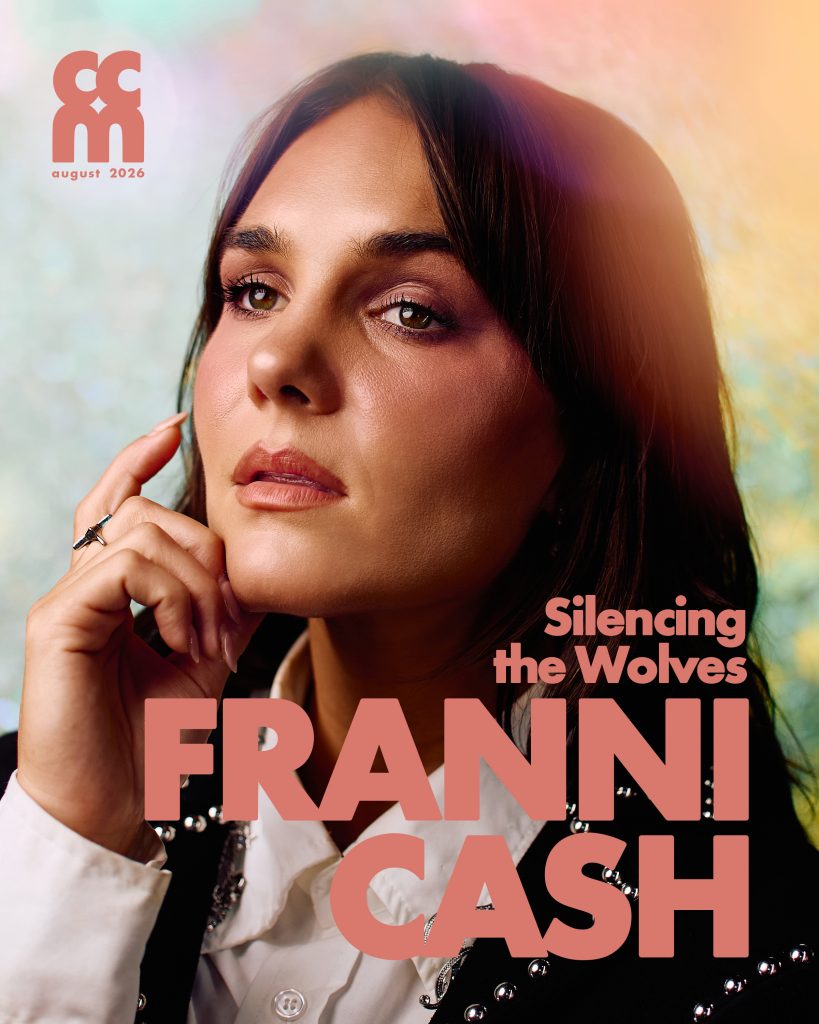
“I didn’t think I was going to make my own music,” she laughed. “I thought that was my family’s thing.”
Growing up with a father whose songwriting and production career influenced so many artists left her wrestling with comparisons she never asked for. She wondered if she could ever measure up or if there was even room for her own voice. The pressure became so overwhelming that she briefly started imagining a completely different future. “I was kind of considering what my other career options were,” she said. “I was thinking maybe going to school for interior design.” Instead, something unexpected happened. She started writing.
This was just a comfortable outlet to process everything she had been carrying without the baggage of a record deal. “Things just started flooding out of me.” She then smiled before describing songwriting. “It’s like you have to do it to breathe. Songwriting is breathing.”
That may be the simplest description of this album. Here I Am, her debut full length solo record, was written out of necessity to herself. It’s about finally giving yourself permission to become who God created you to be.
What began as private journal entries set to music slowly became something she felt compelled to share. “I thought going into this, writing songs that are so specific to my story… that’s going to be a disconnect for people,” she told me. “And I was completely surprised at how something so personal, became universal.”
No song illustrates that better than “Raised By Wolves.” In this song Franni chose to confront one of the deepest wounds of her life head-on. “I was terrified to put it out,” she admitted. “I didn’t know the narrative people were going to build around it. I thought they might think that I was talking about my parents, especially after leaving the family band.” She quickly set the record straight. “It was not at all about my parents. I love my parents.”
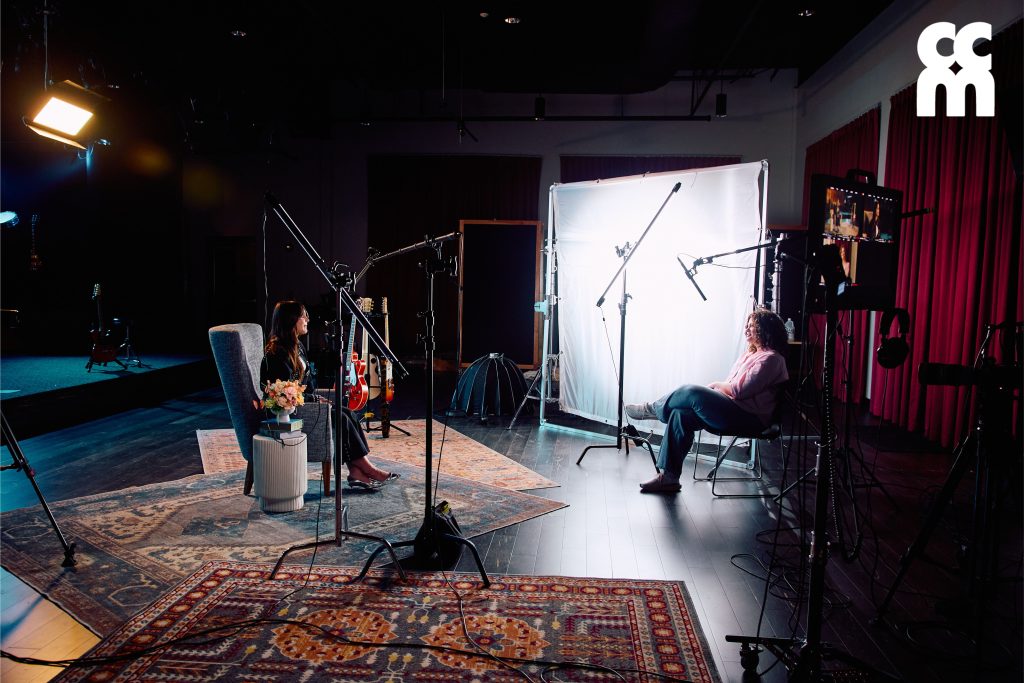
“Things just started flooding out of me. It’s like you have to do it to breathe. Songwriting is breathing.”
Instead, the song was born from an entirely different chapter of her life, one that had shaped her faith long before We The Kingdom ever existed. The song and many of the albums theme come from a traumatic church experience she walked through. “’Raised By Wolves’ is so specific to my story of growing up in a toxic church environment,” she explained. “So many people have come to me with this general feeling of betrayal from the place that was supposed to be safe.” The experience left her questioning not only the people who had hurt her, but the God they claimed to represent. She describes that season as one where fear, manipulation and control became tangled together with faith. It wasn’t until years later that she began separating the character of God from the actions of people who had misrepresented Him.
What struck me most wasn’t the trauma itself. It was the lightness with which Franni now talks about it. That’s not to say those experiences didn’t leave scars. They did. But as she reflected on that season, I wasn’t sitting across from someone trapped by bitterness. I was sitting across from someone who glows with gratefulness. “I think that song taught me a boldness,” she said. “It helped me tap into, ‘Let’s not care what people think. Let’s just say what we need to say and go for it.’ It kind of broke off some… almost fear of man in me, which was incredibly empowering.”
Night after night, her audience found someone willing to say out loud what they had only whispered to themselves. “I think people are starving for authenticity,” Franni told me. “When you’re honest about your story, it gives other people permission to be honest about theirs.”
Perhaps that’s why Here I Am feels like an invitation stop pretending and fully believe that the failures of people don’t redefine the character of God.
While this album was taking shape, another chapter of Franni’s life was unfolding. She had recently married Austin, who shares the stage with her today, and as she spoke about their life together, there was an unmistakable sense of peace. The heaviness that surrounded some of the earlier stories gave way to laughter, gratitude, and the quiet confidence of someone discovering what healthy relationships can actually look like.
Healing, it seems, has a way of touching every part of your life.
The reconciliation she experienced with her family after leaving We The Kingdom, the freedom she found in writing songs she never intended anyone else to hear, and the new season she and Austin were building together all seemed connected. None of it happened overnight, but looking back, it’s difficult not to see God’s hand weaving each thread together into the same story.
Franni told me there came a morning when something happened that she never expected. The church leader at the center of so much of her pain had since passed away, and the ministry that had once seemed untouchable had long since crumbled. If there was ever a moment when you might expect someone to feel vindicated, this was it. Instead, God revealed something entirely different.

“I woke up and thought, ‘I wish I could have one more conversation with him,’” she recalled. “That thought shocked me.” For years, she believed healing would arrive when someone apologized, acknowledged the hurt, or somehow made things right. Instead, God revealed that something inside her had already changed. “I realized… this must be forgiveness.”
Not because the past suddenly disappeared. Not because the wounds weren’t real. But because they no longer had the final word.
Listening to Franni describe that moment, it became clear that Here I Am is about rediscovering the character of God after people have distorted it. It’s about finding your own voice after years of comparison. It’s about choosing family over success, authenticity over perception, and freedom over fear. That freedom is woven throughout the album and Franni herself.
Rather than chasing a radio format or recreating the sound that made her famous with We The Kingdom, Franni has made something refreshingly personal. Every song feels like another chapter in the same story. Some wrestle with doubt. Others celebrate grace. Together, they form a record that isn’t interested in pretending life is neat and tidy. Instead, it points listeners toward the hope that can only be found after walking through the fire.
“I think people are starving for authenticity. When you’re honest about your story, it gives other people permission to be honest about theirs.”
For the first time, Franni wasn’t trying to fit into someone else’s expectations or carry the weight of a legacy. She was discovering what her own creative process looked like, and that process just happened to include her husband, Austin.
“I got to have him produce,” she said with a smile. “I think he produced maybe the most songs—or touched the most songs—out of anybody on the record.”
Then she laughed.
“I’m sure I was really hard to work with.”
Austin, she insisted, would probably tell you the same thing.
“I’m kind of a perfectionist, and I was trying to find my thing,” she admitted. “But he was so, so gracious.”
Her explanation for why he survived the process might have been my favorite moment of the interview.
“He has all sisters,” she laughed. “So he knows how… it was like he was made for it. He knows how to deal with women for sure.”
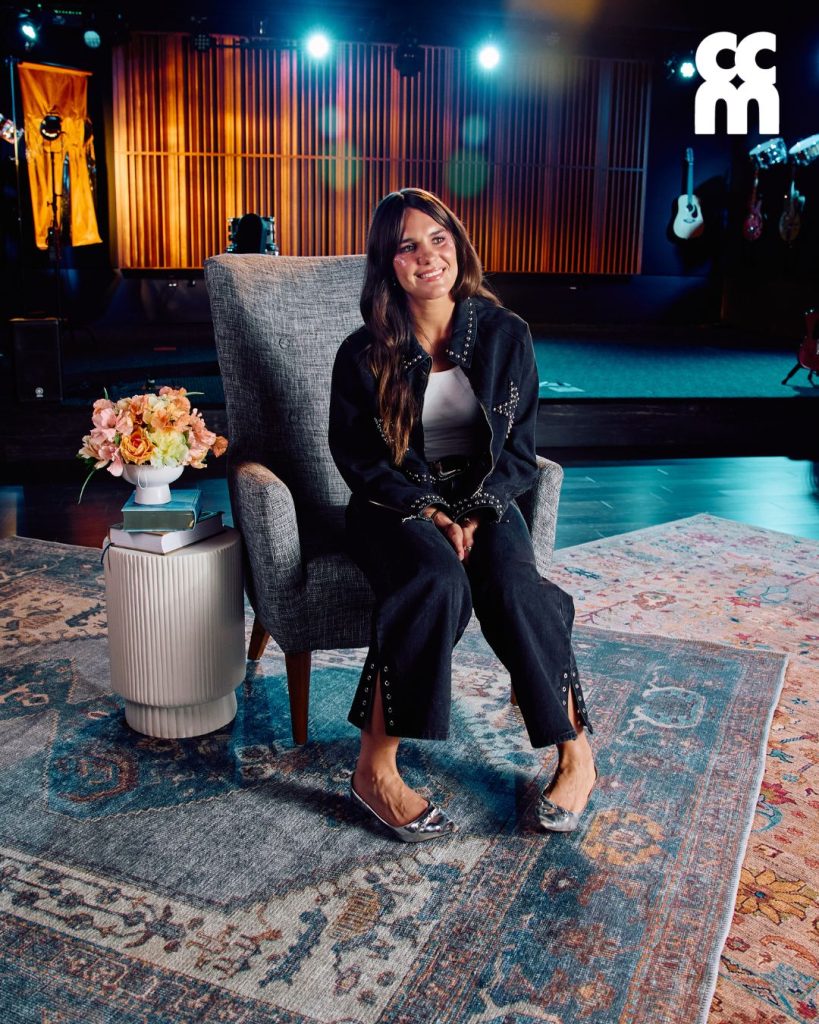
The room erupted in laughter.
Behind the joke, though, was genuine admiration. Long before Here I Am became a reality, Austin had already been part of Franni’s musical journey.
“When we met, it was before We The Kingdom really took off,” she said. “He’s really been a part of my journey with music the whole way through.”
Now, for the first time, they get to share that journey in a completely different way.
“It was so much fun,” she said. “Getting to tour together… I’ve gotten to watch him take off, and he’s gotten to watch me. It’s really fun getting to be a part of each other’s journeys.”
That sense of partnership echoes throughout Here I Am. While the record is deeply personal, it never feels lonely. Even in its heaviest moments, there’s an underlying confidence that comes from knowing Franni no longer has to carry the weight of proving herself. She’s surrounded by people who believe in her, not because she’s part of a famous family or one of Christian music’s biggest bands, but because they believe in the artist she has become.
Listening to the album after spending time with Franni, I found myself hearing it differently. The soaring melodies are there. The production is rich and intentional. Her unmistakable voice is as captivating as ever. But those things aren’t what stayed with me.
It was the honesty.
You hear it in every lyric. You hear it in the questions she’s no longer afraid to ask. You hear it in the confidence of someone who has stopped trying to prove herself and started trusting the gifts God placed in her all along. Not because she’s trying to replace what came before, but because she’s finally embracing what has always been uniquely hers.
As she prepares to take these songs around the country with her husband Austin by her side, there is an unmistakable joy surrounding this season. The woman who once wondered if writing songs this personal would alienate listeners is now watching them become anthems for people searching for hope. The songs she never intended anyone else to hear are now reminding thousands of people that they aren’t alone.
As our conversation came to an end, I found myself thinking back to where it began. The people sitting across from us are almost never exactly who we think they are. Sometimes they’re even better.